Pages

October 4, 2010

Sharp unveils Galapagos e-Reader tablet

Sharp has announced that it plans to join the e-book party with an online store and a coup...

Sharp has revealed plans to launch an e-bookstore and a couple of color tablets/e-book readers in Japan by the end of the year. While the few thousand offerings from online bookstore at launch is unlikely to make a huge dent in Amazon's or B&N's user base, the Galapagos mobile and home tablets look promising. Detailed specifications are sadly lacking but they will both be able to get online wirelessly, play multimedia content and come pre-installed with social networking applications to allow the sharing of comments and favorites with friends and family.
Sharp says that the name Galapagos was chosen "as a symbol of the 'evolution' of services and terminal devices that constantly bring fresh, new experiences to the user" and plans to join a crowded tablet/e-Reader marketplace from December. At the time of launch, Sharp will have around 30,000 newspapers, magazines and books to offer early adopters which is not even a blip compared to the millions on offer from the already established competition.
However, Sharp is not aiming at a global client-base just yet, which is reflected by the fact that the content will be delivered in the latest generation XMDF format to allow support for Japanese texts in addition to video and audio content. The e-bookstore will offer a subscription-based newspaper and magazine delivery service as well as trial content from new book releases to help users decide on future purchases.
The opening of the e-bookstore will coincide with the availability of a couple of color LCD devices, a 5.5-inch mobile unit and a 10.8-inch home unit. Both Galapagos tablets/e-Readers will have 802.11b/g Wi-Fi built in for connecting to Sharp's e-book portal and surfing the web with the included browser, but no 3G.
There's no official word on which operating system has been chosen although most bets seem to be on Android. Details are also lacking on the kind of touchscreen experience users can expect, the level of storage on offer and compatibility with external storage media and the likely battery life.
The 10.8-inch device will have a 1366 x 800 resolution LCD screen capable of high definition video playback and is said to be just the right size to offer comfortable reading of a magazine double-page spread. The 5.5-inch version offers resolution at 1024 x 600 and features a trackball for mouse-like navigation.
Sharp will also introduce some PC software called Galapagos Station that will allow users to organize downloaded content on a computer and convert documents for reading on the tablets/e-Readers.
A Japanese Galapagos product portal has been set up, where more information will be revealed closer to the release. No pricing details have been announced at this time.-gizmag.

Going chainless with the Stringbike


At first glance, a proposal to replace a bicycle's familiar chain and cog drive with one that uses string may sound like lunacy, but that's exactly what's been done to produce the Stringbike. The system features freewheel mechanisms on either side of the rear wheel connected by polyethylene rope to a precisely positioned, symmetrical swinging arm that drives the bicycle forward. When the unit on the right is driving the bike forward, the other is being returned to its starting position and vice-versa which is said to result in greater efficiency and makes for a more comfortable, easier ride.
Stringbike's roots lie in a postgraduate challenge at Budapest Technical University in the early 1990s, to think outside the box and overcome some design issues relating to chain-driven bicycles. One team proposed a chainless system involving freewheels on either side of the rear wheel, which is driven by a sophisticated wired pulley mechanism. The aim was to overcome inefficiencies of a chain and gear system – where the drive mechanism is placed on just one side of a bicycle – that have gone relatively unnoticed due to the ubiquitous nature of this design.
An earlier, now abandoned Stringdrive design

The design has undergone numerous changes since development proper began in 1994 and various problems led to a couple of the designers giving up and moving onto other things. Work started again in 2006 with Michael Lantos and Robert Kohlheb at the helm. Using computer-aided-design software to help iron out some of the issues, they ended up with the Stringbike you see here.
The Stringdrive system consists of a drive unit on either side of the bike frame. Each unit is positioned in mirror symmetry to the other, so when one is moving forward, the other is moving backwards. When force is applied to the pedal, the stainless steel, triangular-shaped swinging mechanism pulls on the rope and rotates a drum on the rear wheel to give forward momentum.
The system uses the kind of durable, high density polyethylene rope used in sailing. Lantos told Gizmag that the rope does have "a little elasticity, and this has been calculated in the process when the task of driving is shifted from one side of the frame to the other one." The rope has a 3mm diameter and a breaking strength of over 900kg (1,984 lbs). There are stronger ropes available, but the designers reckon that the maximum load (greatest transmission ratio, highest pedal force) on the four cords is only about 450kg (992 lbs).
The system is designed so that when one triangular-shaped eccentric disc is pulling the wheel's drum forward, the other is going backward and returning the rope to the starting position. The symmetrical system "shifts the task of driving unnoticeably from the right to the left sides and vice versa" to offer a familiar, more comfortable, experience for the rider.
The Stringdrive alternating drive system benefits from 19 different transmission ratios – the outer position gives maximum and the inner gives minimum ratios – which are selected by moving the rope wheels up and down the notch positions on the swinging arm. A major achievement with the final design is the ability to freewheel backwards.
Lantos explained: "Normally if you use two differing freewheel clutches in the rear wheel they allow rotation of the wheel in forward direction only. As no bike can be commercialized that cannot be pushed backwards, this simple-looking task had to be solved, and it was technically very difficult."
The Stringbike has undergone lots of intensive testing over the development period, "including operating in a test machine under load over 10,000 km [6,214 miles], then riding by several bikers under very different conditions." The system is sealed against weather and dirt but the rope, swinging arm and outer casing of the drums will need some attention – soiling of clothing from oil should be avoided though.
Only one manufacturer has so far been licensed to use the system, Schwinn Csepel, but actual commercial manufacture has yet to begin. Future incarnations of the system may see different transmission ratios being used on either side of the bike to cater for those who have a weakness in one leg.-gizmag.

Smart ebike with 4-level electric boost and regenerative braking

smart has announced a pedal-powered bicycle with electric assist named e-bike

If you were wondering about the other two-wheeled vehicle pictured with the smart escooter at the Paris Motor Show, then read on. The company has also announced a pedal-powered bicycle with electric assist named ebike which shares regenerative braking technology and similar smartphone integration with its cousin. When the ebike reaches a certain speed, the hub motor cuts out and the bike is driven by leg-work only.Unlike some other pedelec (pedal electric cycle) vehicles available at the moment, the electric drive on smart's e-bike is not activated via a throttle grip on the handlebars. The 250W brushless direct current wheel hub motor activates as soon as the rider starts to pedal and provides four levels of electric support, controlled by a button on the handlebar. Depending on the motorized support level chosen, smart says that the ebike has an effective range of between 30 and 90 km (18.6 and 55.9 miles) per charge.
Of course the actual range depends on the amount of leg work employed by the rider. For much of the time, the ebike would be providing electric support to the user's pedaling but when the vehicle reaches a speed of 25kph (15.53mph), the electric assist cuts out and the it becomes a purely muscle-powered vehicle. Because of this, smart says that it can be used without the need for a driving licence (although local regulations may alter this fact).
The ebike is powered by a 36-volt/9.6Ah Lithium-ion battery pack which is concealed within the frame paneling above the crankcase. It can be charged from a household mains socket and is said to take just two to three hours to fully charge.
Just like the escooter, the ebike features regenerative braking technology at the rear hub-motor, with conventional braking itself being provided courtesy of hydraulic disc brakes at the front and rear.
Also like its cousin, the ebike will integrate with smartphones via a smart drive kit app. When placed in a special mount, the phone automatically activates the electric drive and becomes an information and control center for the vehicle. A trip computer interface advises the rider of battery status, current and average speed and also includes a heart-rate monitor and navigation system. There's even a GPS tracking function to help users locate a parked e-bike.
The rider can, of course, access other smartphone functions such as playing tunes from the phone's music library or going online to access a favorite radio station and so on. As an anti-theft measure, removing the smartphone effectively locks the drive.
For those occasions when four-wheeled transport is more practical, further development of the app could see integration with the car2go mobility concept being included.
Designed and built in cooperation with GRACE and weighing just 22kg (48.5 pounds), the ebike benefits from strong, lightweight aluminum profiles making up its frame, which also hide all of the wiring. smart says that the profiles are strong enough to support the lightweight wheel at the rear without the need for supporting struts.
Both 26-inch wheels feature six double spokes which the company says "enhance ride comfort thanks to good intrinsic damping, and can also cope well with rough road surfaces." A belt pulley and toothed belt replace the traditional chain and cog setup and the front full LED headlight is fitted into the handlebar, which is claimed to have the same effect as active curve illumination on cars. The rear LED lamp is mounted on the underside of the rider's saddle.

Peugeot's electric assist racing bike concept

Peugeot's unnamed electric assist concept

Tucked away on the Peugeot stand at Mondial De l’Automobile (October 2-17) is a racing bicycle with electric assist. It’s almost an identical situation to the very similar machine Lexus showed at the 2009 Tokyo Motor Show, except Lexus wassubsequently prepared to give us the specs, whereas Peugeot isn’t and the Peugeot model on display is clearly still at least partially conceptual but there a few clues that indicate this “concept” is a lot more than just a styling exercise.
Peugeot showed its first car at the Paris Exposition of 1889 and had already been manufacturing bicycles for seven years at that time – the Grand Bi was a Penny Farthing style bike which went on sale in 1882 and became one of the key factors in establishing the company’s reputation for quality engineering.
In the subsequent 128 years, Peugeot’s commitment to bicycles has ebbed and flowed, with the bicycle division being separated from the automotive company and subsequently re-embraced.
Bicycles have been humanity’s most popular personal transportation device for the last century, having outsold the automobile every year to the present day and recognizing that the marketplace for personal transportation will diversify rapidly over the next few decades, the French giant has developed the most complete range of options available anywhere under one brand – two wheelers powered by humans, electric and gasoline, a hybrid three wheeler and a range of electric, gas and hybrid four wheelers.
More than any other marque, Peugeot has explored the combination of electricity with other forms of motive power to develop transport suitable for niche markets.
It is hence logical that the growing electric bicycle marketplace deserves development and exploration and a close look at the electric racer concept indicates they’ve been thinking well outside the square.
Firstly, there are no hub motors. Hub motors are common to nearly all electric bicycles as they represent the easiest way to electrically power a two wheeler while keeping it light and still having enough room for the batteries.
Whatsmore, the concept appears to have two “cranks” – one for the electric motor and one for the human powered crank, both residing in the main frame of the bicycle indicating that the electricity will most likely be fed in as pedal-assist. The other thing notably lacking in the concept machine is a final drive – now we may be clutching at straws here, but is it possible that the final drive will be something other than we’re accustomed to? The chain drive is lightweight and as efficient as it’s possible to get, but logically, if Peugeot is to compete in this marketplace, it needs to differentiate its products from those of the many Chinese electric bike manufacturers and our guess is that a few patentable technologies are in the pipeline.
Peugeot’s recently announced partnership with Cycle Europe, Europe’s leading bicycle manufacturer is another pointer to its commitment to the market and to the application of its IP and R&D facilities. Peugeot already has a strong relationship with Sanyo, the world’s largest rechargeable battery maker, where it sources batteries for its hybrid automobiles.
Peugeot has positioned itself better than any other company to cover all the logical sub-markets in the personal transport spectrum. It will be the first automobile manufacturer to offer an electric scooter in 2011, has a hybrid three wheeler set for production later this year, and is showing a pedal assist bicycle at Paris which will also go into production.-gizmag.

October 3, 2010

MAJLIS SAMBUTAN AIDILFITRI PERDANA EOCM 2010

MAJLIS SAMBUTAN AIDILFITRI PERDANA telah selamat dilangsungkan di Bukit Fraser pada 2hb Okt 2010. Berikut adalah gambar-gambar aktiviti di sana yang disediakan oleh Chief Ezanee Tawil. ( gambar bawah )
Ezanee Tawil

Paris Motor Show 2010: Renault

Paris Motor Show 2010: Renault
The DeZir is said to have a top speed of 160mph
It’s all about electricity chez Renault. The firm unveiled two new, 100 per cent electric vehicles at the Paris Motor Show, the DeZir sports car and the Zoe urban car.
The 160mph Dezir is the more dramatic of the two but it’s only a concept – for the time being. A 24kWh battery mounted behind the front seats is said to give the DeZir the feel of a mid-engined car. According to Renault-Nissan CEO Carlos Ghosn, it sports “emotional design” as part of a philosophy of “progress for man, and for the planet.”
On a more prosaic level, he said that Renault is working towards useful and affordable mobility for all.
In-line with this the Zoe is a five-door urban car, narrow but tall, and previews a vehicle scheduled for production in 2012.
For today, Renault is showing plug-in hybrid versions of the Megane and Twingo hatchbacks, with CO2 emissions of 109g/km and 90g/km respectively.
There’s also the restyled Laguna, in coupĂ© and estate forms. Saloon duties are taken care of by a new derivative badged Latitude, which looks remarkably like an enlarged BMW 3-series at the rear.
Paris also marks the world premiere of the Twizy, a tandem two-seater that's scheduled for production in 2012. With a 60-mile range, the electric Twizy will cost from around £6,000.-telegraph.co.uk

2010 Paris Motor Show: Venturi America Concept revealed

2010 Paris Motor Show: Venturi America Concept revealed

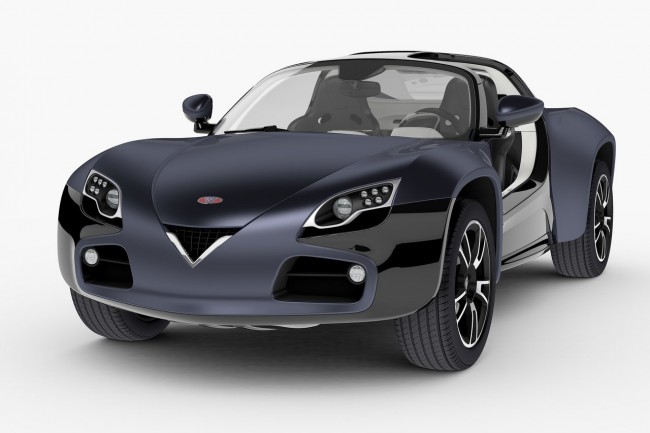
The Paris Motor Show witnessed the unveiling of the Venturi make car that had been announced before hand. The car is a combination of the traditional American values as well as awareness of the current need of the world as far as ecological factors go. The car is an electric power driven one and the engine is same as that fitted on the Venturi Fetish. The power that we get is 300 hp or 220 kw and more along with 380 Nm of torque. The battery pack that is installed on the car is a 54 KwHr rated one and has LIV-10 Lithium ion Polymer cells. The battery management system has been designed by Ventec who are the leading people in this field.
Total range of the car with a single charge is 300 km and the recharging facility is via standard socket or even could be recharged at the fast recharge terminals. The chassis has been so designed so as to be able to accommodate a large number of batteries. The material of the car is carbon monocoque and this has very high protective properties that would be beneficial for the occupants.
Two deformable cells which are positioned at the front and rear of the car complete the body structure of the car. In case of an accident the battery case is therefore protected. This car has been named as both a sports as well as an all terrain leisure vehicle. The Venturi America could therefore be aptly called the electric buggy.-speedlux.com
Related Posts Plugin for WordPress, Blogger...